Monday, March 16, 2009

More SoCal Cars

My recent trip to Santa Barbara was perhaps the best yet. Not only did I get to go skiing in a t-shirt in Big Bear, but I got to drive quite a sweet collection of cars. (Hey look, it's a couple riding an ATV down my suburban street! Sorry, I got distracted.)

Anyway, I was treated to, among other things, a drive in what I had considered my "white whale", a water-cooled Porsche 911. Not only did I get to drive one, but it happened to be one of the top examples, a Carrera 4S cabriolet, with Porsche's new PDK double-clutch transmission. I had two days of bliss with this car, and loved every minute of it. It's been quite a while since I've driven my uncle's air-cooled '88 911 cab, but I can say with certainty that this is a whole different beast. The stability is second to none, with none of the fear of swing-tailed antics to which earlier cars were subject. The sounds were perfect, and the thrust is astounding from a 6-cylinder.
In terms of usability, well, you've gotta give up something for this kind of perfection. The interior feels perfectly spacious in front, but don't expect any real humans to ride in the back seat. And the dash layout of 911s is a bit behind the trends of the day, though the materials are top notch. The one not-so-pleasant surface inside was the bottoms of the doors, where Porsche, in an effort to prevent door scuffs--which are certainly common getting in and out of a car--has placed a very course carpeting. The "trunk", which is a relatively small compartment under the hood, actually seemed to be custom fitted for my expanded roller luggage bag, but could not have fit anything else. The one final gripe about the 911 was its lack of auto headlights. This car starts at $103,900, and it can't match this feature on my $30K VW? 

Still, this car was pure joy to drive, and now that I have, I guess I'll have to look for a new white whale. I'm thinking Aston Martin...

I was also able to enjoy some Audis, including the new A4 and A6. The A6 I drove was the new 3.0T model, which contrary to its name actually has a supercharged 3.0L V6. While I've given turbos a personal pass since I moved to (relatively) larger naturally aspirated engines, I've gotta say that I'm thinking my next car my have a supercharger. This engine was wonderfully powerful, and gave no hint of the inherent trade-offs of a turbo: namely the lag. Some people object to superchargers because of their whine, but I noticed none of that disagreeableness here.  I can't wait to drive the new S4 with this engine, which will be a phenomenal driver's car, lighter than the V8 S5, and nearly as powerful. 

The A4s I drove were nice, solid competitors in the segment, but nothing that remarkable. The one thing I will say is that Audi has done a great job tuning it's new clutch-operated automatic transmission to feel as though it still has a torque converter. I'm assuming it was created to improve fuel economy, but unlike my R32, which has a bit of a jerky, unnatural feel as it starts to roll when you take your foot off the brake, the A4s had an immediate, smooth take-off that hid the nature of the driveline connection.

I got to drive a new VW CC, as well, and while it's not really that special compared with the Passat, boy does it look good. Interestingly, people seem to comment a lot on the interior of this car. It actually has the same dash as the Passat, but that's a car that has largely flown under the radar in its latest iteration. Back when I was selling VWs, around 2002-03, Passats were hot, having just gotten an '01.5 refresh that added strategic chrome and new head and taillights to give the car an upscale air at a relatively small price premium. The current generation has not done as well, possibly as a result of VW's quality issues, but also I think because the look of the car is slightly awkward. On top of that, the new car starts at nearly $30K, which is pushing it for many people in the mid-size segment. 

The CC, however, aims at a slightly different class of competitors, which we in the biz call Near Luxury. It ranges from bigger cars like the Nissan Maxima, to smaller models from luxury brands, like the BMW 3-Series. With the CC's style, it has legitimate claim to compete within this segment, and since VW has actually been advertising the CC (something they haven't done for the Passat in quite a while) many of my friends have been commenting on how nice it is, especially inside. Well, the ultimate conclusion is that it took a lovelier outer shape to bring out the inherent inner beauty of the Passat. I think once the CC catches on, it'll take the Passat's slot nicely, and allow the upcoming domestically-produced Altima fighter to take over as VW's mainstream family sedan. 

Another VW I was finally able to drive is the Jetta TDI. While wholly unremarkable in most ways (aside from VW's normal elevated level of fit, finish and tuning), the engine was great. I truly hope that diesels take of in American passenger cars, since these motors will allow even automotive enthusiasts to get in on the act of saving energy. 

My drive in the Nissan 370Z was quite entertaining, what with the car's magical rev-matching software. It's exactly what an affordable sports car should be, and the interior materials left me quite impressed. I really don't have that much more to say about this car, other than to segue into my impressions of the new Hyundai Genesis coupe. 
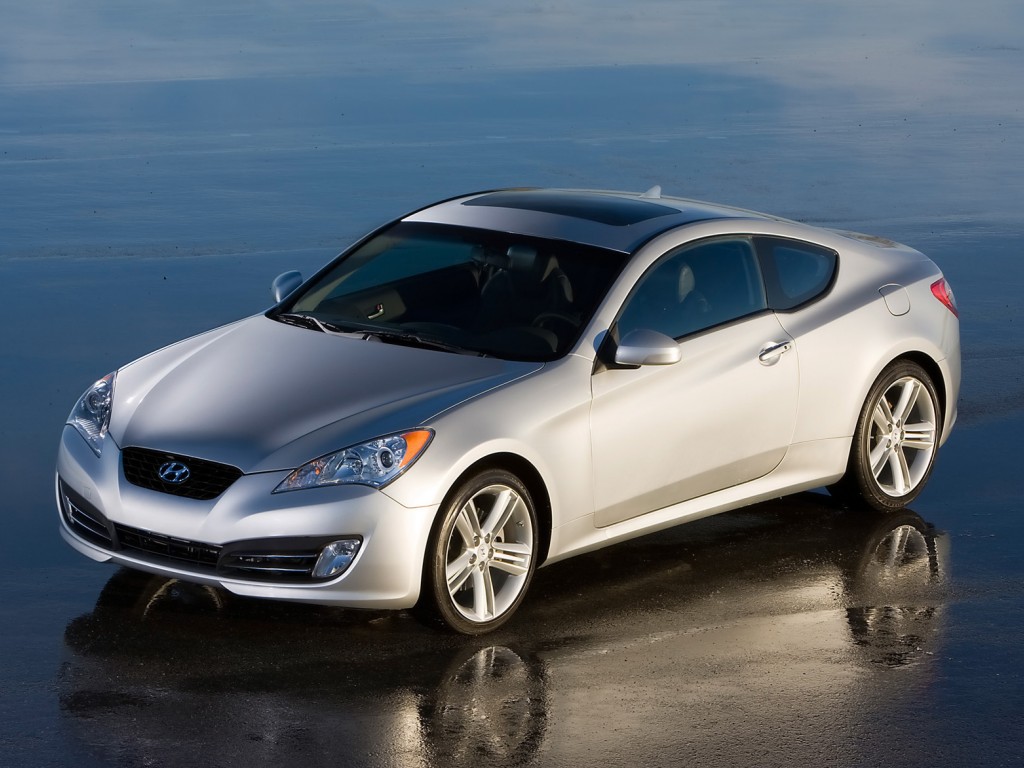
Compared with the Z, the Genesis coupe clearly does not have the decades of pedigree behind it that Nissan offers. But the differences are in degree, not whole orders of magnitude. The steering, for example, did not have the right boost level for every situation, being too tight in parking lots. But overall, it's a phenomenal effort on Hyundai's part, and the V6 model starts at around 5 grand less than the Z. The biggest surprise for me was the engine, which sounded even better than the Z's. With plenty of pull, it's an amazing sports car value. I highly recommend taking a drive in one of these. I'm sure the dealer will be eager to let you. 
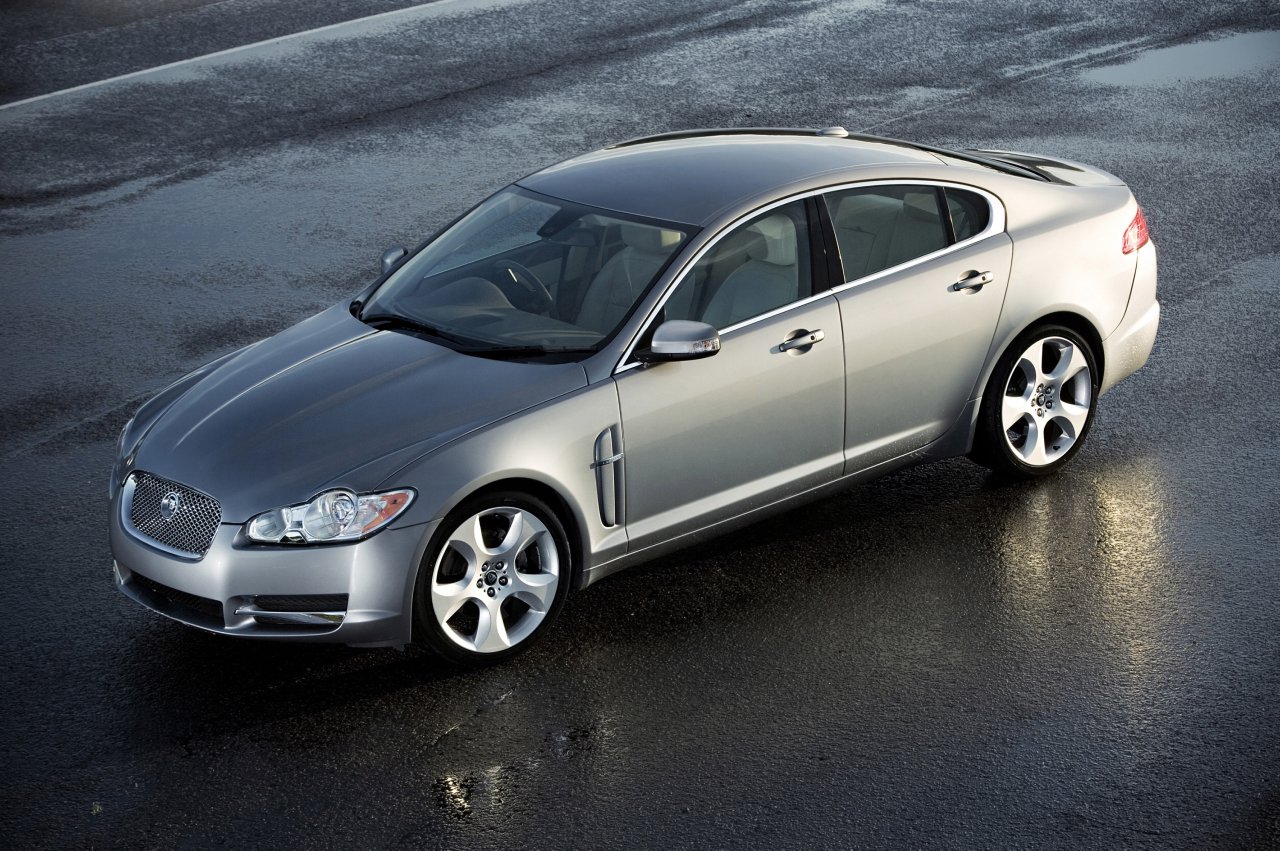
After missing the opportunity to drive the Jaguar XF last time I was in town, my wait paid off. Instead of the base model we had 6 months ago, I was treated to the supercharged variant, and it was a blast. While I'm only 28, and haven't driven too many Jags, I can confidently say that this is exactly what a Jaguar should be. While it's tuning was softer than a youngblood like myself would desire, the ride was fantastic, with an effortless sense of speed, even on twisty back roads. It presents the ultimate in comfort and stability, no matter what the road throws at it, and it's lightning fast. It's too bad the reliability of the car is sub-par, especially with all the bells and whistles they've thrown in. I could easily see this car being rendered undriveable due to a faulty, non-rising gear selector knob. 

Finally, I'll end with the car I had the pleasure to drive up the mountain for my ski trip: the BMW M3. There are no adequate words to describe this car, but to sum it up succinctly it was simply bad-ass. A monster flow of power and torque at all rev ranges gave this car a menacing presence that was matched by its power dome hood. And what a comfortable cruiser! My friend's girlfriend, who is not short, rode in the back the whole way (about 4 hours) with nary a complaint. For me, the driver's seat was a wonderful place to spend those hours, fending off fatigue easily. And BMW's new dual-clutch gearbox was a joy, an serious improvement over my DSG 1.0, especially in the down-shift department. 

The interior was a step up from the typical 3-Series boringness, with woven leather covering the dash, indicating this car's specialness, just like the engine-turned aluminum does in my car. I've always had a preference for Audis over BMWs because of design, but this latest M3 gives me pause. The fact is there's one factor which could actually push me over the top in selecting a Bimmer, and that's seat comfort. I realized on this trip that Audi and Porsche, two brands I've admired and desired for years, bolster their lower seatbacks far too aggressively for my tastes. The TT I drove last year was uncomfortable shortly into each trip I made with it, and this is exactly why. I know many drivers prefer more lower back support, but I like very little, and this has become a deal-breaker for me. Ironically, VWs have great seats for my taste, and so my planned brand upgrade may not happen as I'd hoped. The M3's seat was superlatively comfortable, and it'll be my standard for years to come. 

Sunday, March 8, 2009

Enduring Designs

First of all, I'd like to apologize to my tens of loyal readers for not posting in a while. I just came back from California (for the first time in a while) and drove some sweet cars while there, so there will be another post on those to follow shortly.

This post, however, fits with the recurring theme of this blog: random thoughts. I was on the road tonight, and saw a car that sparked a familiar thought of mine: That's a nice-looking car, even though it was designed over 15 years ago. The car I was looking at was actually a Ford Probe (the second generation; I'm not a big fan of the first). 
There were actually two other cars which came to mind that fit a similar bill, the last Mazda RX-7 and the 2nd-gen Toyota MR2, and I've had the thought about all three multiple times, but now I've decided to pull them together and find a few others that I think have enduring style. 
Mazda deserves a special mention in this post for its solid styling stint in the '90s, when it had some of the sexiest coupes around. I actually had to take another look at the MX-6 and MX-3 to make sure I didn't want to include them, too (some might consider that thought ridiculous). 

Clearly there's a theme with these cars, though. They're all sporty coupes with rounded contours and pop-up headlights, which have clearly gone the way of the dodo. But aside from that anachronistic feature, I think that each of these designs, were they to be introduced today--with a collective societal brain-wipe of the memory of their existence--could stand on their own.
I'll admit that the MR2 is pushing it a bit, since it was designed in the '80s (and introduced for 1990), and it's a bit before the point which I would consider the cutoff for "modern" design. You can see that in some of the details, like the black trim line on the side, and the lack of shaping in the lower air dam. But I think that makes its styling achievement all the more remarkable, and I'd bet it still turns heads occasionally. 

In searching for a few more examples of vehicles that have aged extraordinarily gracefully, I was able to come up with two more, though I'm sure that every one of these vehicles will have several people calling me crazy.  

The first is not that far out there, since it is yet another sports coupe. I always thought the 2nd-gen Mitsubishi Eclipse was a knock-out. The 3rd was an abomination, but the 1995 Eclipse continues to stand the test of time as a great looking car. And just like Mazda, Mitsubishi had some solid styling chops in the '90s, and you can see how they've tried to return to that era, as some of the lines from the latest Lancer mimic some earlier Galant themes. I remember seeing the 2nd-gen Diamante in Australia (called the Magna there) in 1997, and thinking it was a great design. If you look at it today, it's still a handsome car.

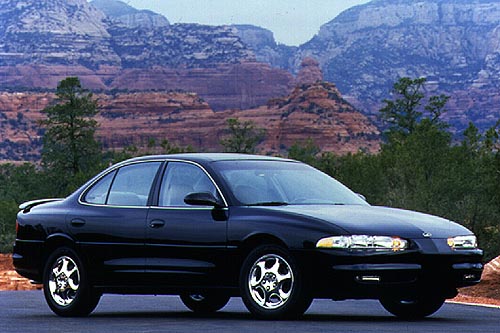
The last car is probably the most controversial, since it's a sedan, and its brand had achieved the highest heights of stodginess before getting the ax by the early 2000s. I still believe it is one of the great shames of modern automotive history that Oldsmobile had to die just as its designs were getting good. (Ironically, it looks like GM is about to be forced into the same decision with Saturn.)

The Intrigue was the best-looking mid-size sedan on the market when it debuted, and its untimely death, with the attending lack of a replacement to make it look old, has helped this design stay pretty fresh, notwithstanding the usual state of disrepair in which you find many current examples on the road. 
So what do you think? Am I nuts. Am I on to something? Please post a comment and let me know your thoughts. It's good to be back!

Wednesday, December 17, 2008

Some Great Americans

As previously alluded to, I'm as bummed about the fate of Detroit as the next guy, and so I thought maybe I could do my small part to help. As anyone who's familiar with this blog knows, I'm a big fan of compact imports, and I've helped my fair share of friends buy Mazda3s and compact VWs. But my import-philia doesn't necessarily mean I'm anti-domestic. Who, then, better to introduce a list of great American iron to you than someone who was raised in the heart of import country?

The fact is that while American cars have been catching up to their import competitors by leaps and bounds in recent years, it takes quite a while for public perception to do the same. So without further ado, I present to you a list, by segment, of American cars you should go out and buy right now. Oh, and as my mother once said, "Do as I say, not as I do." ;-)


Saturn Astra: Although GM has clearly starved its Saturn arm of marketing muscle, the fact is many of its new cars are winners. This is especially true of the Astra, which as brought over pretty much as-is from Europe, where it competes with the top-selling VW Golf and the superb Euro Ford Focus. It's a bit of a step down from those expensive competitors, but a big step up from the compacts the US market is used to. It combines handsome looks with lively handling, high efficiency and great space usage to give compact buyers the total package. 


Chevy Malibu: This car is quite simply one of the best competitors in the midsize segment. It matches or surpasses the Japanese leaders in style, handling and value, and is a major leap forward for the General in this segment. 


Pontiac G8: GM's answer to the Chrysler 300, this one has a more widely appealing style (well, at least it'll age better, I think), and better handling. It's basically a BMW 5-Series on a budget, and is what the Pontiac brand should be all about. Ooh, and soon you can get it with a truck bed out back, a la El Camino. Word.


Pontiac Solstice/Saturn Sky: These roadsters were Bob Lutz's first brainchild when he got to GM, and they're still as exciting as they were then, especially in GXP/Red Line forms. But grab one fast, because GM is not planning to renew their lease on life. 


Chevy Corvette: This is all-around the best sports car value on earth. Coming in flavors varying from awesome to double-awesome Z06, to triple-super-throwdown-awesome ZR1, these cars regularly match the performance of those costing twice as much. Not to mention their beauty and their amazing efficiency (26 highway for a 430-hp pushrod V8?!!).


Saturn Vue: Another rebadged Euro product, this CUV is attractive and upscale. Too bad, once again, that GM has choked off the division's marketing juice. 


Ford Edge: This crossover is handsome, handles well and has Ford's great 3.5L V6, the American answer to the Nissan VQ, but smoother. When I was at the ad agency, I even got to work on claims that it's faster than a BMW X5 or Porsche Cayenne (the V6 models, of course). 


Ford Flex: If that's your style (it's certainly not mine), then this is a great vehicle. The interior package is amazing, despite its lower roofline than competitors like the GMC Acadia and Honda Pilot. The materials they use are fantastic, it has that same 3.5L V6, and it also boasts some really cool features, like the Sync multimedia system and an in-car fridge...and you can get a contrasting white roof, just like on a MINI!


Jeep Wrangler: I recently had the pleasure of taking one of these things off road at Chrysler's Chelsea Proving Grounds, and it was a blast. The thing is so ultimately capable, and it's stayed true to its roots all these years. And now you can get one with four doors. 


Dodge Ram: I haven't driven it myself, but my colleagues tell me it's the best-riding truck out there, thanks to its now coil spring rear setup. Amazingly, they did it without any degradation to the previous truck's capabilities. Add to that the new actually-attractive interior and innovations like the Ram Box bed-side storage, and we have a winner. 


Ford F-Series: These trucks are tougher than a mofo. At the agency I got a chance to hear about the durability testing they put 'em through, and it did more damage to the engineers inside than the truck itself. It's pretty brutal. Their capabilities are unmatched by anything of similar size in the world, and the new generation of Power Stroke diesels is not only brutally torquey, but clean as a whistle. If only they weren't ugly...

Cadillac CTS: I while ago I posted that this was the first American car I'd actually buy myself. The rest of the cars on this list are great cars, but they just don't suit my taste. But this one, well it's got great looks, a phenomenal interior, a powerful direct-injection V6 available with a stick, and a great sport suspension. This is a fantastic car.


Lincoln MKS: This is a perfect example of a great car for other people, but not for me. We drove it back to back with the Lexus GS, and this car blew that one out of the water in several ways. The interior is top notch, and it's got great looks. With the available AWD and 20" wheels, it makes no difference that it's based on the Taurus' front-drive platform. Though that happens to be one of the safest in the world. This is what a Lincoln should be.


Buick Enclave: This is the best value in luxury CUVs, even though many buyers won't give Buick the credit it deserves because of recent history. The Enclave is gorgeous inside and out, and it shares the space efficiency and solid feel of the rest of GM's Lambda large crossovers. It may seem pricey for a Buick, but it's dirt cheap compared to an Audi Q7. Maybe people will chuckle at the country club, but we all know your self esteem is more secure than that. 


Coming soon--the Ford Fiesta: Don't laugh. This isn't your hippy cousin's ratty old Fiesta. This is the most exciting small car on this side of the Atlantic since the Mini Cooper. You may have noticed that my list of cars was dominated by GM, while Ford has the edge (no pun intended) in trucks and CUVs. But Ford is about to unleash a slew of sweet rides, including the Euro Fiesta and Focus. The Fiesta comes first, and it'll blow the Chevy Aveo sky high, with great styling, great handling and a great interior. It's grrrrrrreat!

So get out there and BUY BUY BUY!!!

Tuesday, December 16, 2008

Keep Calm and Carry On

This explains the reference in the previous post: http://www.keepcalmdetroit.com/

Detroit '67

I started listening to a new radio station recently, 93.9 The River, Windsor-Detroit, and they play a really great variety of stuff. One of the new songs I've been introduced to is Detroit '67, by the Sam Roberts Band. Not only is it a great, swingin' song, but it's got a wonderful sense of the city's history, and the video that accompanies it is fantastic. 

Detroit's history makes me both sad and proud, even though I didn't grow up here. The city, and the surrounding region of Southeast Michigan, have an amazing spirit, and I think it's one of the reasons why I feel so at home here, despite my New York roots. 

Anyway, I've looked for the song on iTunes, and it just ain't there, but I did find the video, so I'm happy to share it here. I don't know if it can inspire the kinds of emotions in others that it brought forth in me, but it's definitely worth a look. 

Keep Calm and Carry On, Detroit.

Monday, December 15, 2008

Bigger is Better?

I recently read a snippet about the CEO of Fiat, Sergio Marchionne, proclaiming that the number of global carmakers will eventually shrink to six behemoths. This, from the over 20 companies of significant size that Automotive News lists on its "Guide to global automaker partnerships". I searched further and found this article. Marchionne says that in order to survive, a company with need a sales volume of over 5.5 million cars each year, a number to which his own Fiat does not even come close.

I don't doubt that Fiat may need a merger to survive, as a recent news item claims it may be seeking. But the fact is, this very same statement was made roughly eight years ago. In a paper I wrote in college in 2000, I cited a claim by many industry bigwigs that by 2010, there would be a lot fewer car companies running the show. How many? The generally agreed-upon estimate was six. In fact, they used a very similar line of reasoning to Marchionne's, stating that there would be two for every major continental base, North America, Europe and Asia. Marchionne has also stated his theory in terms of geography: 'As far as mass-producers are concerned, we're going to end up with one American house, one German of size; one French-Japanese, maybe with an extension in the U.S.; one in Japan; one in China and one other potential European player.'

But the fact is, there hasn't been a huge amount of consolidation in the industry since that first round of predictions almost a decade ago. These predictions were likely precipitated by the "merger" of Daimler and Chrysler in 1998, and the alliance of Renault and Nissan, which had been inked the following year. We all know how the former turned out, creating not economies of scale, but rather one of the largest destructions of company value in automotive history. The latter tie-up is still going strong, and paying dividends, but aside from that, there has been little action that suggests a highly consolidated industry.

And why does Marchionne think that size is inherently good? While it's true that there are obvious advantages that stem from the basic principle of economies of scale, there are also downsides to this, most notably the loss of corporate agility. Corporations like GM have huge resources to offer its producers in each market, but if the act of marshaling those resources becomes cumbersome, decisions cannot be made in a timely manner, and competitiveness suffers.

While GM is a great example of how size does not necessarily equal strength (as is Ford, one of the other four companies cited as above Marchionne's magic 5.5m number), there are some equally good examples of smaller companies that have so far proven resilient in this tough economic climate. Honda is thriving, as Japan's number-two producer, because the company has refused to compromise its ideals. Its growth has been organic, driven by demand rather than production.

An even better example of the principle is Porsche, a company which sold less than 100,000 units last year. Despite its volumes, Porsche has managed its business so well that it is now financially powerful enough to have gobbled up a controlling interest in the only German company that is "large enough", Volkswagen. Porsche has achieved this clout with strict discipline, and tough decisions made based on the existing business and market climate (including the oft-derided decision to market an SUV). 

Size may be what's important to Fiat at this moment, but that doesn't necessarily mean that it is the major determinant to survival throughout the industry. It's true that for any company to survive, it needs to achieve a decent level of scale. But at a certain point, scale can become counterproductive if not managed the right way, and the right product decisions will, in my opinion, always trump size in importance. 

Thursday, December 11, 2008

Poor American car companies...


They're now the subject of mocking email forwards. I got this one from my dad today:

A MODERN PARABLE...
A Japanese company ( Toyota ) and an American company (Ford) decided to have a canoe race on the Missouri River . Both teams practiced long and hard to reach their peak performance before the race.

On the big day, the Japanese won by a mile.

The Americans, very discouraged and depressed, decided to investigate the reason for the crushing defeat. A management team made up of senior management was formed to investigate and recommend appropriate action.

Their conclusion was the Japanese had 8 people rowing and 1 person steering, while the American team had 8 people steering and 1 person rowing.

Feeling a deeper study was in order, American management hired a consulting company and paid them a large amount of money for a second opinion.

They advised, of course, that too many people were steering the boat, while not enough people were rowing.

Not sure of how to utilize that information, but wanting to prevent another loss to the Japanese, the rowing team's management structure was totally reorganized to 4 steering supervisors, 3 area steering superintendents, and 1 assistant superintendent steering manager.

They also implemented a new performance system that would give the 1 person rowing the boat greater incentive to work harder. It was called the 'Rowing Team Quality First Program,' with meetings, dinners, and free pens for the rower There was discussion of getting new paddles, canoes, and other equipment, extra vacation days for practices and bonuses.

The next year the Japanese won by two miles.

Humiliated, the American management laid off the rower for poor performance, halted development of a new canoe, sold the paddles, and canceled all capital investments for new equipment. The money saved was distributed to the Senior Executives as bonuses and the next year's racing team was outsourced to India.

Sadly, The End.

Here's something else to think about:
Ford has spent the last thirty years moving all its factories out of the US, claiming they can't make money paying American wages.

TOYOTA has spent the last thirty years building more than a dozen plants inside the US. The last quarter's results:

TOYOTA makes 4 billion in profits while Ford racked up 9 billion in losses.

Ford folks are still scratching their heads.

IF THIS WEREN'T TRUE, IT MIGHT BE FUNNY.


While it's obviously a gross oversimplification, the fact is that this story does give you a decent idea about how the Americans go about things sometimes. 

The one thing I thought was left out was Ford asking its ad agency to do a brainstorming session to rename the canoe...twice.